




AI is already a part of many caregiving routines. From medication reminders to fall detection, more caregivers than ever are leaning on smart tools to help watch over an aging parent, but that comfort has limits. Bay Alarm Medical surveyed caregivers to find out exactly where those limits are. We asked which tasks they’re happy to hand to a machine, which ones they still want a human to own, and what it would take to move that line.
The results point to a clear split. Caregivers are largely on board with AI as a safety net, but far more guarded about AI as a stand-in for human connection. They’ll accept a reminder, an alert, or a monitor, but draw the line at a conversation, diagnosis, or decision.
Key Takeaways
- 56% of caregivers are currently using AI-powered tools to help with their caregiving responsibilities.
- 38% of current caregivers want AI tools used on themselves when they get older.
- Nearly 1 in 5 caregivers (19%) would pay $100 or more per month for AI monitoring of their loved one.
- 46% of caregivers would accept more AI monitoring of their loved one if it meant less stress for themselves.
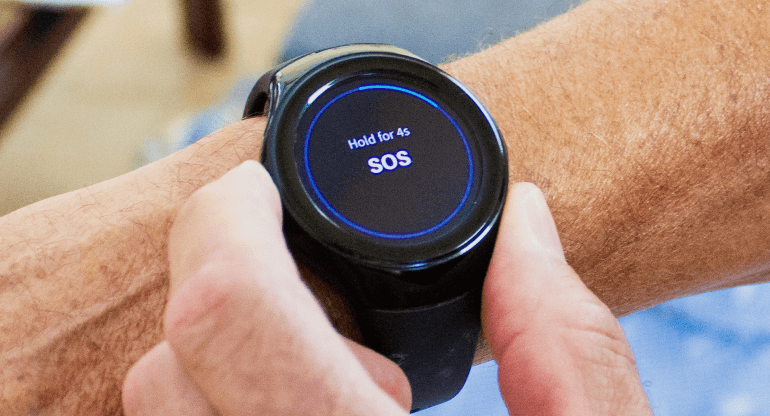
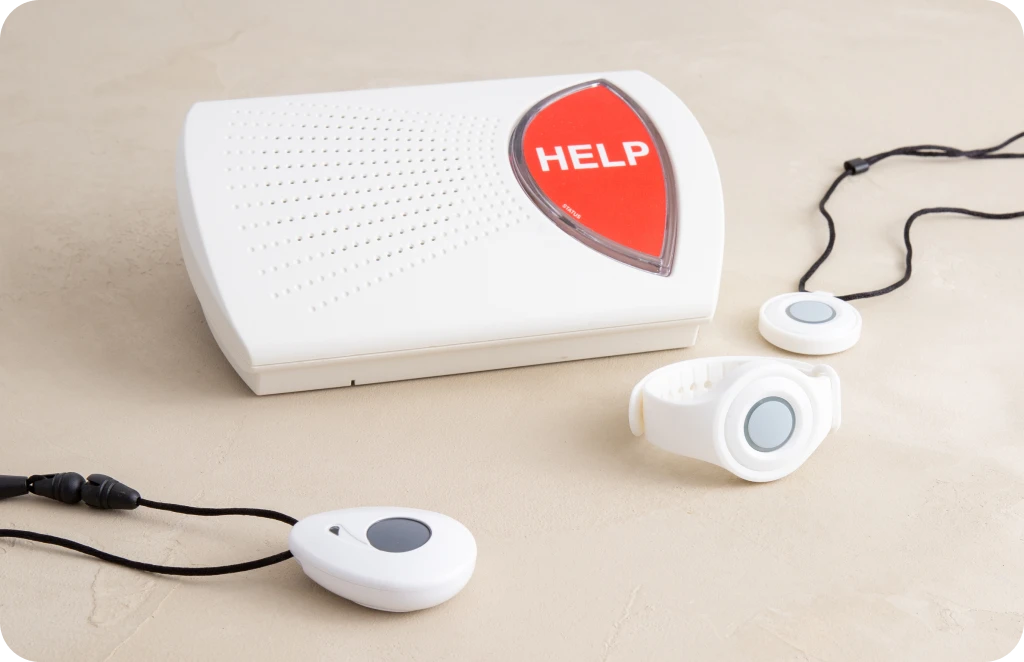
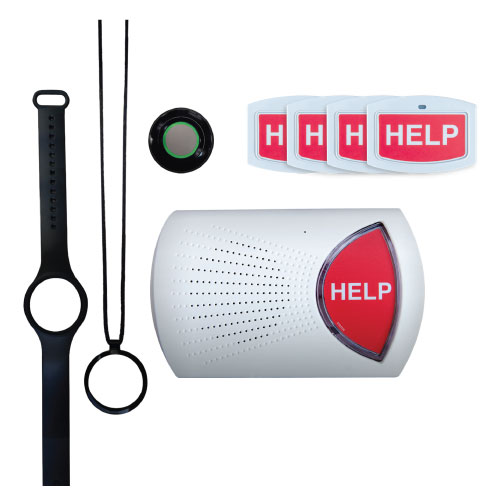
- 53% of caregivers are open to AI-powered emergency alerts, and 17% already use them.
- 78% would trust AI care tools more if one caught a health issue that human caregivers missed.
Safety, Yes. Companionship, Not So Fast.
Caregivers aren’t waiting around for permission; many are already using AI in some form, and most are open to more.
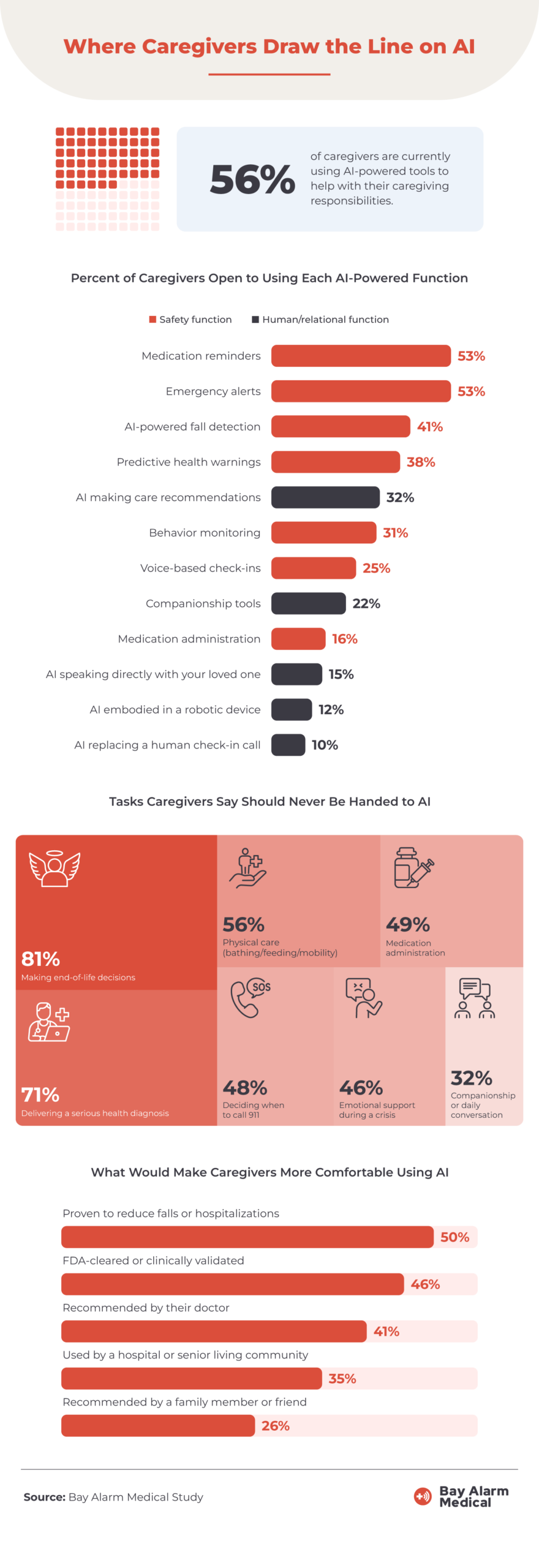
More than half of caregivers (56%) are currently using at least one AI-powered tool to help with their caregiving responsibilities. Gen X is the most likely to have adopted one (58%), followed by millennials (56%). That openness isn’t evenly distributed across all use cases.
A full 81% are open to at least one AI safety function, such as fall detection, alerts, reminders, or monitoring. But only 45% are open to any human or relational function, such as companionship, conversation, or AI-driven recommendations. Of the 53% open to emergency alerts, 17% are already using them.
Caregivers are just as clear about what they won’t hand over. Making end-of-life decisions topped the list, with 81% saying it should never be left to AI. Others were uncomfortable with AI:
- Delivering a serious health diagnosis (71%)
- Providing physical care like bathing, feeding, or mobility assistance (56%)
- Administering medication (49%)
- Deciding when to call 911 (48%)
- Providing emotional support during a crisis (46%)
The one line that barely budges is direct interaction. Only 15% of caregivers are comfortable letting AI speak directly with their aging loved one. Millennials are the most hesitant generation, at 12%.
Trust isn’t fixed, though. It can be earned. Half of caregivers (50%) said they’d feel more comfortable using AI if it were proven to reduce falls or hospitalizations. FDA clearance or clinical validation (46%) and a doctor’s recommendation (41%) would also build greater confidence in AI tools.
What Caregivers Trust AI to Do
For many caregivers, the value of AI-powered tools isn’t just in the safety they provide, but in the peace of mind they offer. Our survey shows just how much caregivers are willing to trade to reduce stress.
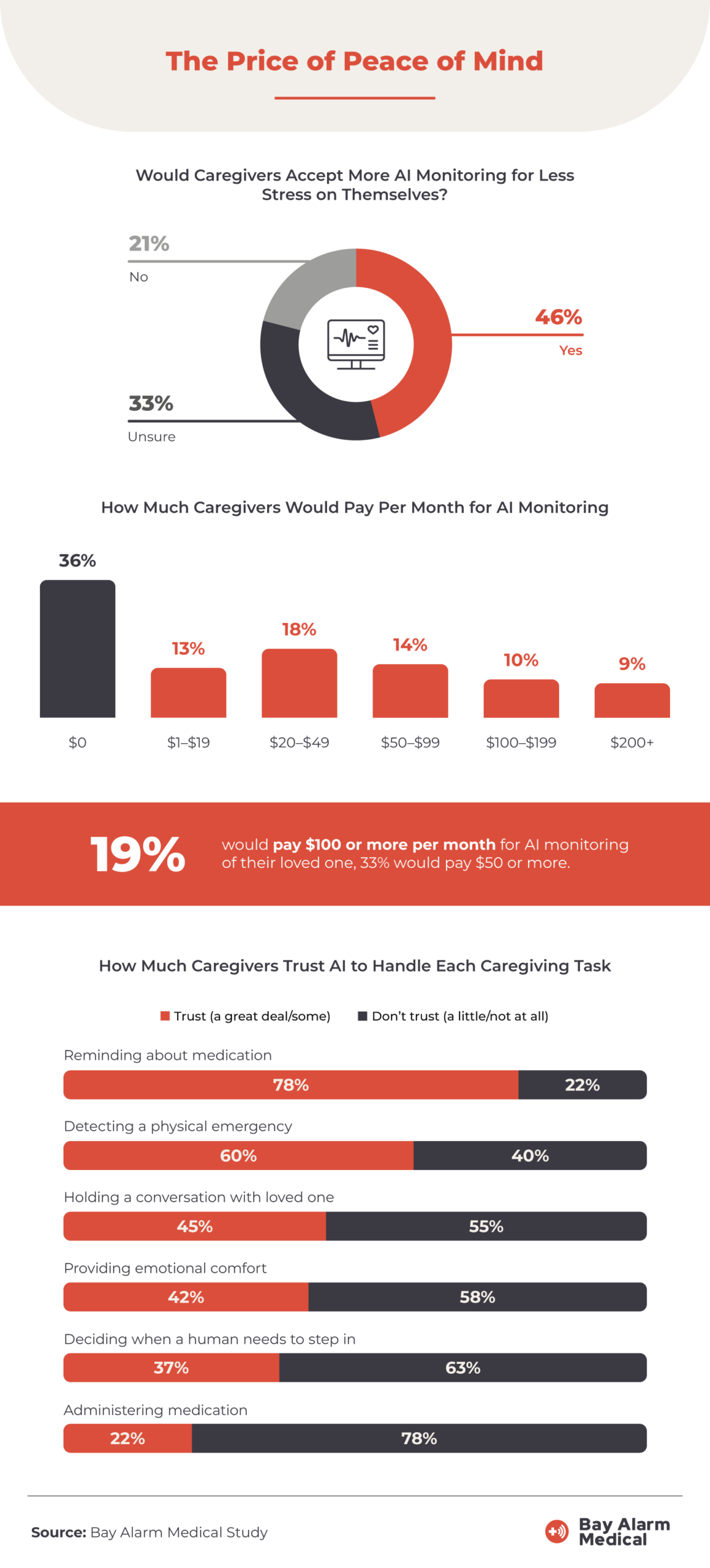
Nearly half of caregivers (46%) would accept more AI monitoring of their loved one if it meant less stress for themselves. For many, the appeal of AI is the relief it offers the person doing the caregiving, and sometimes that can be worth the price. Nearly 1 in 5 caregivers (19%) would pay $100 or more per month for AI monitoring of their loved one, and 33% would pay $50 or more.
When asked if they trust AI to handle caregiving tasks, caregivers’ answers again varied depending on the situation. They’d trust AI most with medication reminders (78%) and physical emergency detection (60%). Then trust dropped when it came to AI holding a conversation with a loved one (45%), providing emotional comfort (42%), and deciding when a human needs to step in (37%).
How Caregivers Think Their Loved Ones Would Feel About AI Care
Even caregivers who are open to AI aren’t convinced their aging parent would feel the same way about it.
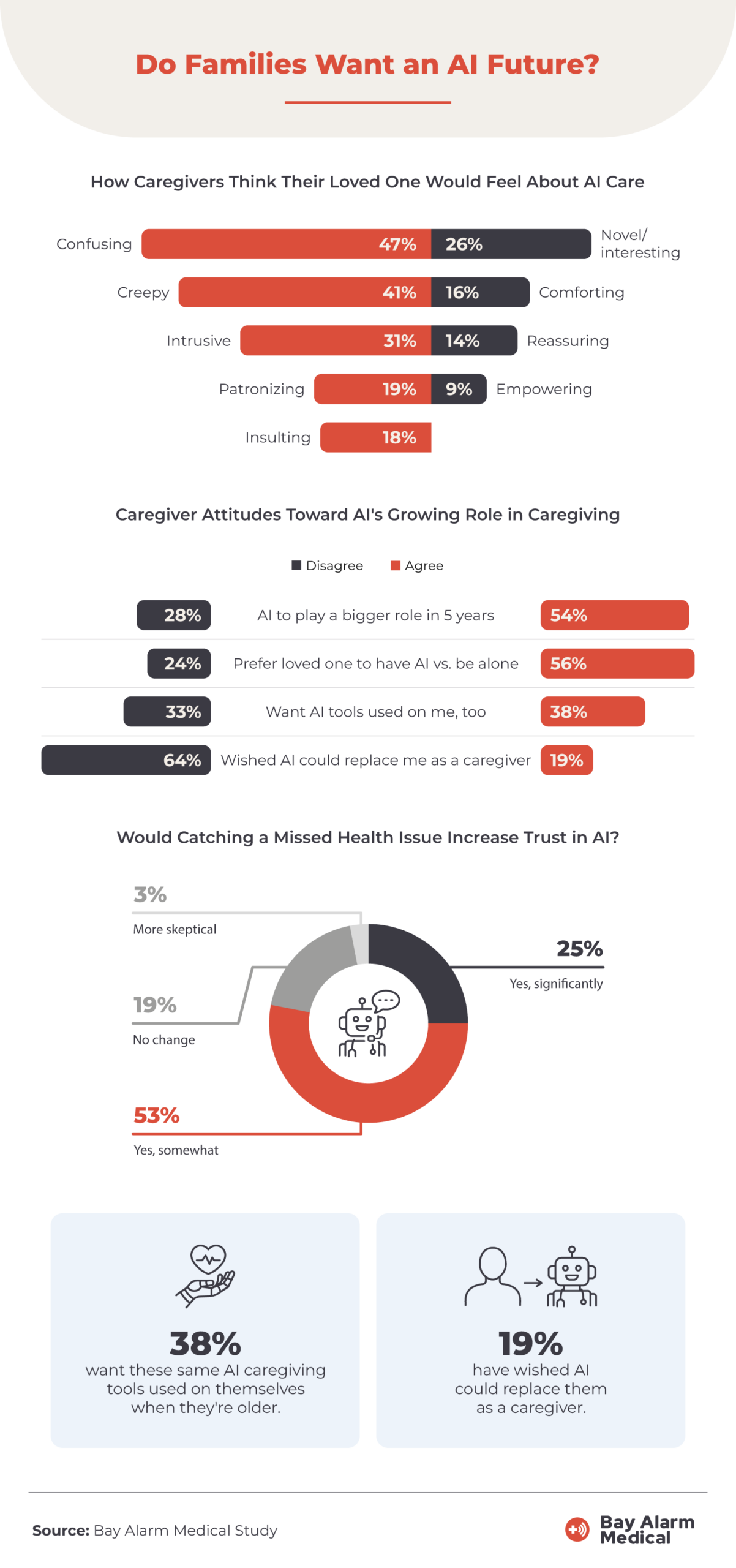
Caregivers most commonly thought that their parents would find AI care tools confusing (47%), followed by creepy (41%) and intrusive (31%). But others had a more positive outlook, believing their loved ones would think AI was interesting (26%), comforting (16%), reassuring (14%), or empowering (9%). Gen X was the most likely to believe that they’d see AI as a comfort (18%), followed by millennials (15%).
That skepticism about how a loved one would react doesn’t fully match how caregivers feel about AI’s future role. More than half (54%) think AI will play a bigger role in caregiving within five years, and 56% said they’d rather their loved one have some AI support than be entirely alone. It gets more personal from there: 38% want these same AI caregiving tools used on them when they’re older, and 19% have wished AI could replace them as caregivers altogether.
AI as a Safety Net, Not a Stand-In
The line caregivers draw is clear. AI is welcome as a safety net, but not as a stand-in for a person. Families want reminders, alerts, and monitoring that catch problems early and take some of the weight off their day. But they still want a human for the conversations, the comfort, and the hardest calls. Used well, AI doesn’t replace the caregiver. It just gives them room to breathe and buys them a little peace of mind.
Methodology
Bay Alarm Medical surveyed 1,000 Americans over the age of 30, 976 of whom are current or former caregivers. Percentages for select-all questions do not sum to 100%. Methodology percentages that do not total 100% are due to rounding.
About Bay Alarm Medical
Bay Alarm Medical’s award-winning medical alert systems help older adults stay safe and independent at home, with 24/7 emergency protection, no long-term contracts, and affordable monthly plans.
Fair Use Statement
This article and its findings are available for noncommercial use only. If you reference or republish them, please include a link back to this page with proper attribution to Bay Alarm Medical.