









Caring for an aging parent comes with real financial costs. Adult children who help care for a parent lose about $12,300 in income and pay roughly $1,300 in out-of-pocket costs each year. Add the value of their unpaid care hours, and the total climbs past $25,000 a year.
Bay Alarm Medical surveyed 507 Americans caring for an aging parent to measure that cost. Most reported losing income over the past year, and many said they had scaled back at work or dipped into savings to keep a parent at home.
Key Takeaways
- Adult children caring for an aging parent lose about $12,300 a year in income and out-of-pocket costs, and once the value of their unpaid care hours is factored in, the caregiver tax exceeds $25,000 a year.
- More than 3 in 4 caregivers (76%) lost income over the past year to keep caring, and more than 1 in 5 (21%) lost $15,000 or more.
- To keep caring, 7 in 10 caregivers (70%) have taken a hit to their job or career, and nearly 1 in 3 (31%) have raided or scaled back their own retirement savings.
- Caregiving is burning people out, with 57% reporting rising stress, anxiety, or depression, 56% feeling burned out. At their current level of caregiving, more than 1 in 10 (11%) say they’re already financially and personally past their limit.
- More than 4 in 5 caregivers (81%) feel they have no real choice but to do it themselves.
What Caregiving Costs in Lost Income
The first cost is the most obvious one, and hard to recover: the money caregivers stop earning.
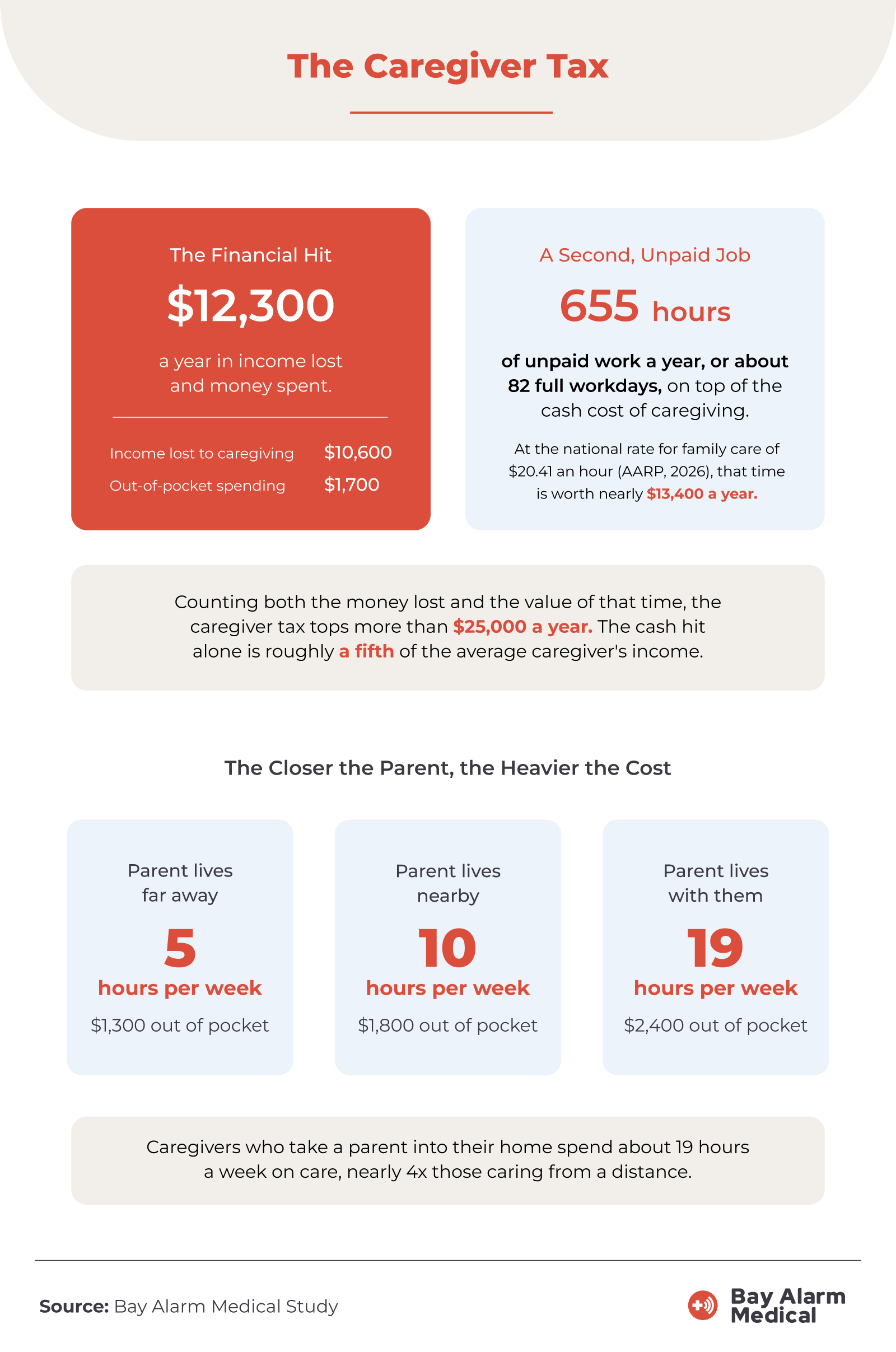
- More than 3 in 4 caregivers (76%) lost income in the past year; half lost less than $5,000, and more than 1 in 5 (21%) lost $15,000 or more.
- Caregivers estimate it would cost about $2,300 a month, roughly $27,600 a year, to pay someone to replace the care they give.
- Losing $15,000 or more in income is reported by 26% of Gen X caregivers, 19% of millennials, and 17% of Gen Z caregivers.
- A quarter of women (25%) lose $15,000 or more in income, compared with just over 1 in 6 men (17%).
Paying for Care by Going Without
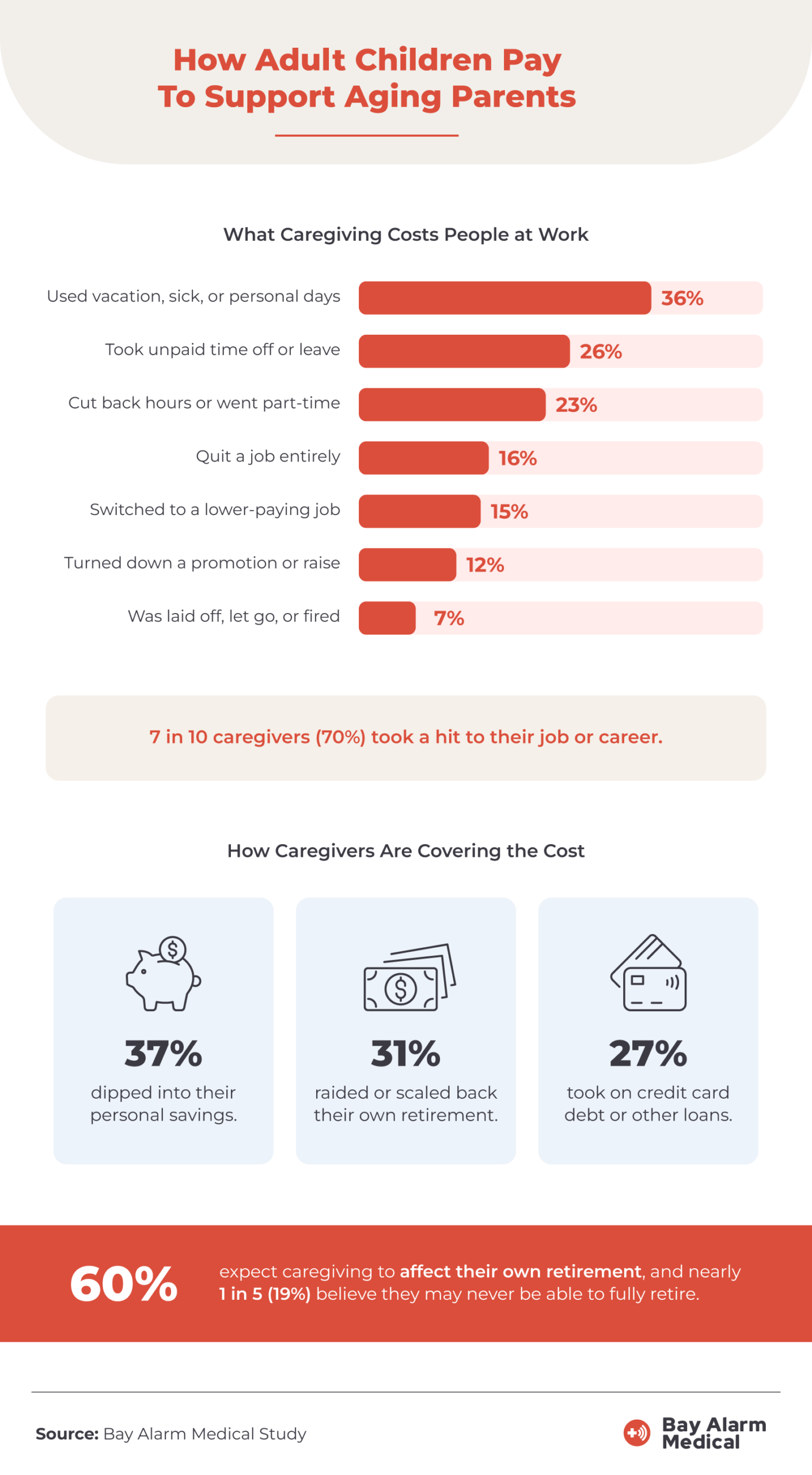
- Exactly 7 in 10 caregivers (70%) took a hit to their job or career to keep caring for their parent, and nearly 1 in 3 (31%) raided or scaled back their own retirement savings.
- Nearly 1 in 4 caregivers (24%) cut back on spending for their own children to manage the cost.
- Nearly 1 in 5 caregivers (19%) moved in with their parent, or moved their parent in with them, to save money.
- Nearly 1 in 5 caregivers (18%) expect they will not be able to retire when they had planned.
- Caregivers have drawn an average of about $1,800 from their personal savings to manage the cost of caregiving.
The Cost of Caregiving, by Generation
- Dipped into personal savings: Gen Z (44%), Gen X (38%), millennials (34%)
- Took on credit card debt or loans: Gen X (30%), millennials (27%), Gen Z (21%)
- Cut back hours or went part-time: Gen X (28%), Gen Z (22%), millennials (20%)
The Toll That Never Shows Up on a Bill
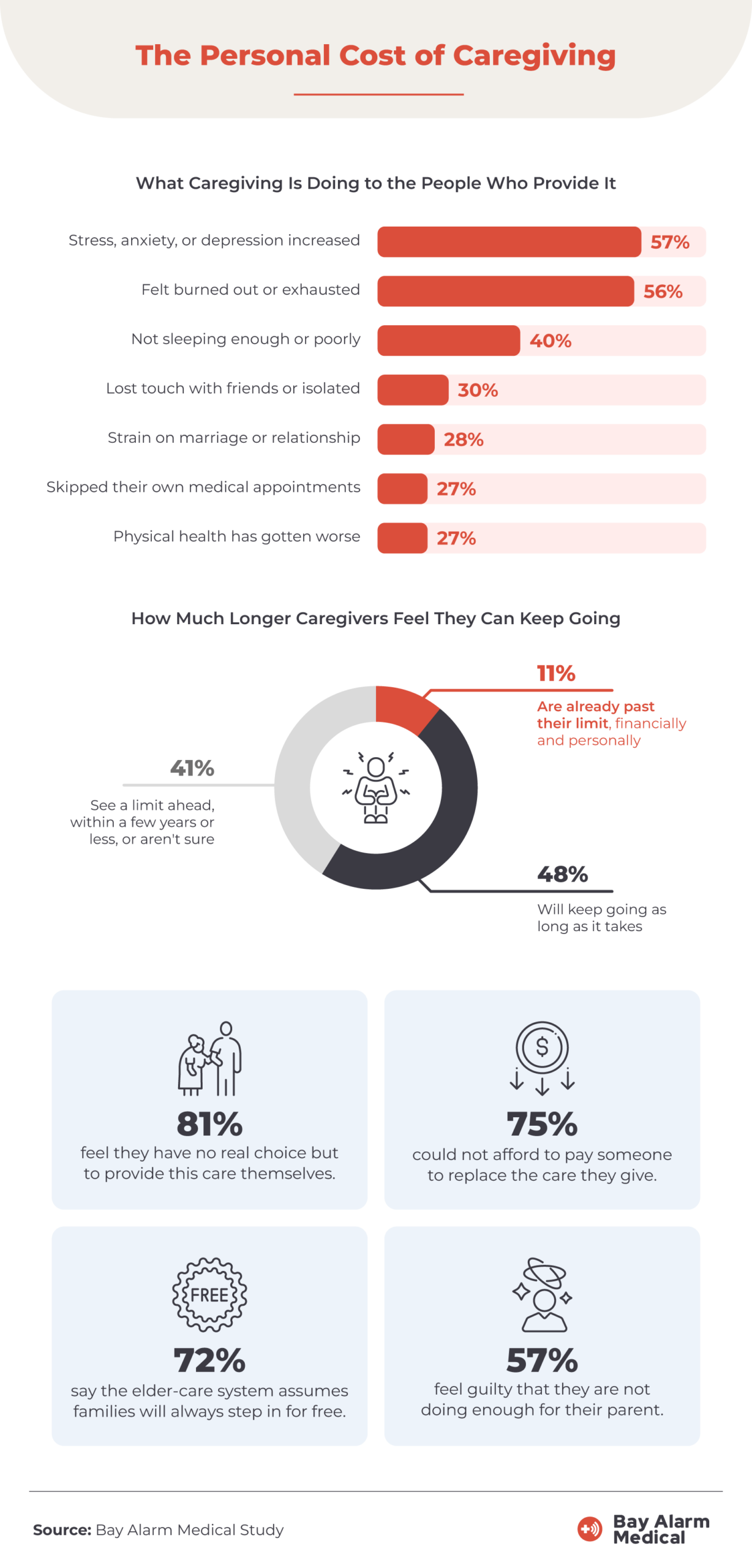
- More than 4 in 5 (81%) say they have no real choice but to provide this care themselves.
- Women report far more burnout than men (65% vs. 45%) and higher rates of stress, anxiety, or depression (62% vs. 50%).
- More than 3 in 4 women (77%) and nearly 2 in 3 men (65%) feel the elder-care system assumes families will step in for free.
- More than 3 in 5 women (61%) and half of men (50%) feel guilty that they are not doing enough.
- Nearly half of women (45%) and about 1 in 3 men (32%) are not sleeping enough or sleeping poorly.
- Caregivers putting off their own medical appointments, by generation: Gen X (34%), Gen Z (25%), millennials (25%)
- Worse physical health is reported by 38% of Gen X caregivers, 26% of Gen Z caregivers, and 20% of millennials.
- At their current level of caregiving, 16% of Gen X, 11% of Gen Z, and 9% of millennials say they already feel past their personal and financial limit.
- More than 1 in 4 caregivers (26%) say they have less time for their own children or family.
Methodology
On June 16, 2026, Bay Alarm Medical surveyed 507 Americans who currently help care for or support an aging parent or parent-in-law to explore the time, money, and personal toll of caregiving. The average age was 42; 59% of respondents were women, 39% were men, and 2% self-described or preferred not to say. By generation, 4% were baby boomers, 32% were Gen X, 50% were millennials, and 14% were Gen Z.
Some questions allowed more than one response, so those totals can exceed 100%. To estimate the annual caregiver tax, the unpaid care hours respondents reported were valued at the national average for family caregiving of $20.41 per hour (AARP, Valuing the Invaluable, 2026). The income lost to caregiving and out-of-pocket expenses are the averages of what caregivers reported losing or spending over the past 12 months.
About Bay Alarm Medical
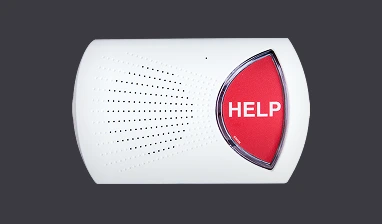
Bay Alarm Medical’s award-winning medical alert systems help older adults stay safe at home, with 24/7 emergency protection, no long-term contracts, and affordable monthly plans. For caregivers, that kind of backup can ease some of the daily worry and the cost that comes with keeping a parent at home. See how the systems work or request a free quote to find the right fit for your family today.
Fair Use Statement
This article may be shared for noncommercial purposes only. If you reference or republish these findings, please include a link back to Bay Alarm Medical with proper attribution.