











Video Transcript
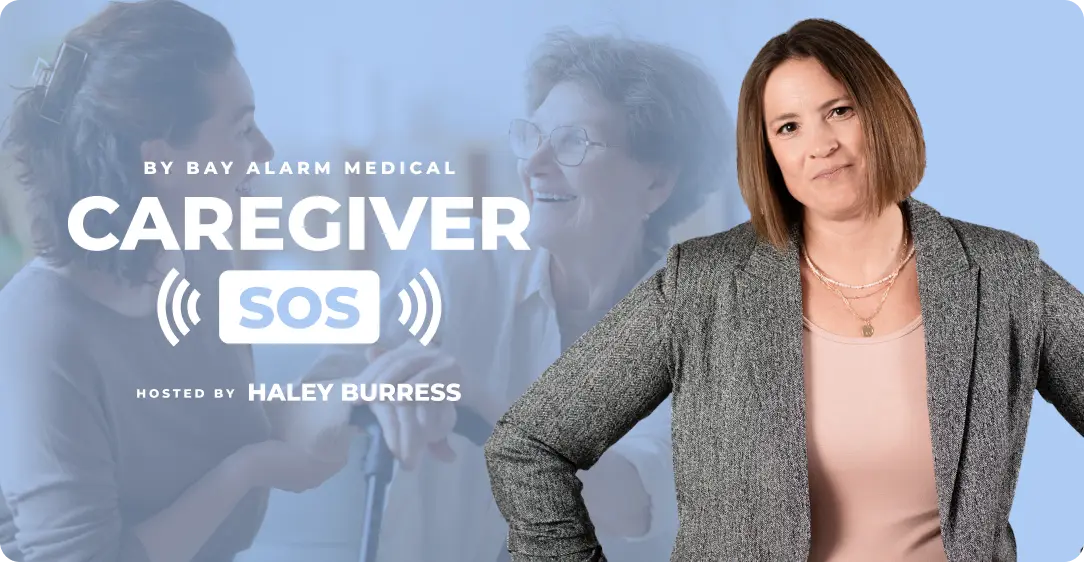
[0:00] Welcome to Caregiver SOS by Bay Alarm Medical. I’m caregiving expert Haley Burress. This is a special highlight episode, digging back into the questions you’ve asked us most about caregiver burnout and knowing when you’ve hit your limit.
[0:26] Family caregiving isn’t easy, and it can lead to some serious mental and physical health complications for some caregivers. I’ve worked with family members before whose health has seriously suffered.
[0:50] One man in particular was caring for his wife in their home. The wife was living with dementia, and she was up and pacing for hours at a time during the night, which meant that he was up with her as well. He wasn’t sleeping at nighttime, and he was stressed out and overwhelmed during the daytime hours. Eventually, his health declined, and he ended up in the emergency room with a heart attack.
[1:03] His kids had to have a serious conversation with him and with one another. Caring for his wife was negatively affecting his health. The family chose to give their dad every chance to live a healthy life and moved their mom into a memory care community that was close by. This way, their dad could visit whenever he wanted, but he no longer had to be the primary caregiver around the clock.
[1:48] Of course, the dad was sad that he was no longer living with the love of his life. But he was much healthier, and their kids didn’t have to worry about him sacrificing his own health.
[1:32] If your health is suffering, you can no longer continue the way that you are. You must prioritize your health and your wellness. Ask for help to find a new arrangement for your aging loved one, and make sure people are stepping in to bridge the gap between now and that new plan so that you can stop your caregiving role and focus on your own life balance and health.
[2:08] I have worked with family caregivers for many years, and one thing I will always say is that you can leave caregiving at any time. It’s okay. You have to take care of yourself.
[2:38] If possible, you do want to leave caregiving without leaving your loved one in a lurch. You want them to still be safe and healthy. So, depending on what your loved one relies on you for, you want to try to replace that before you dip out completely. Using resources like home care services, free meal delivery services, and other local services can help with this.
[2:45] Start by contacting the senior services department in your loved one’s town, as well as their local Area Agency on Aging. They can start to put you in contact with agencies and resources that can help you during this transition.
[3:12] Will you feel guilty? Probably, and that’s okay too. Will your loved one be angry? Maybe. They might also completely understand. In any case, if you feel like your time with caregiving is done, honor that. You deserve to be healthy too.
[3:24] Hitting the caregiving wall is different for all of us, so this advice is more for you to consider and apply to your specific situation.
[3:36] First, I don’t think you should be everything that your parent needs. It’s too much to put on one person. You can be a primary caregiver, but you still need people around to support you and to support them. This can be other family members, friends, neighbors, or hired caregivers from a home care agency. It can also be enlisting the help of a senior living community or local adult day services program.
[3:56] Next, I think you should try to find that extra support before you hit the wall and get to the end of your rope. Caregiver burnout is real, and it can leave you feeling depressed, exhausted, sick, and unhealthy. If you can find the support you need before you hit that wall, you benefit and so does your dad.
[4:20] There are warning signs that you’re approaching that wall. You’re getting sick more often. You’re dreading visits with your dad. You aren’t sleeping or eating well. You haven’t been out to dinner with your friends for months. Start looking for support when you notice these red flags.
[4:44] Feeling trapped is a common caregiver feeling. I know that doesn’t fix your situation here, but I wanted to let you know that you’re normal for feeling that way. You can love your dad and be upset about missing out on a promotion.
[4:58] If you’re feeling trapped, there are some coping skills that you might try. The first is making respite care a priority. Get some help so that you can take some time off your caregiving role. Have other family members pitch in, or have your dad pay for home care services.
[5:20] You can also reduce your caregiving load in general, not just during respite times. For example, can you get someone else to take three weekly tasks so that you can have that time back? Local senior service agencies are there to point you in the right direction of finding outside support so that you don’t have to do it all by yourself.
[5:30] Finally, having at least one thing that you actively pursue outside of caregiving can be helpful. Maybe you’re training for a half marathon. Maybe you’re really into flower arranging. Find a hobby and make it a passion. You can’t pour everything into caregiving, and you shouldn’t. Pour your energy and talents into something else, and you’ll start to feel less trapped.
[6:00] Like and subscribe for more caregiving advice.