




Wouldn’t it be terrible if paramedics arrived at your home and gave you medication that they thought would help – only to discover you’re allergic to it after your throat starts to swell?
In an emergency, having accurate medical information available can make an important difference. You may be unconscious, confused, frightened, or simply unable to remember all the details that first responders need to know. Even if you are conscious, the stress of an emergency can make it surprisingly difficult to recall medications, medical conditions, allergies, or other important information.

That is why Bay Alarm Medical provides a Vial of Life form to speak for you when you cannot speak for yourself. It allows our customers to have their complete medical information ready in their home for EMS to reference during an emergency.
What Is a Vial of Life?
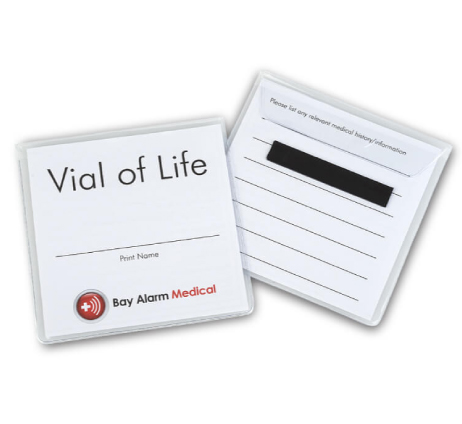
The Vial of Life is a medical information form designed to give emergency medical personnel a quick overview of a person’s health information. It can include important details such as current medications, medical conditions, allergies and other information that could affect emergency treatment.
The idea is straightforward: instead of expecting someone in an emergency to remember everything, put the information in writing and keep it somewhere first responders know to look.
The form is supplied in a clear plastic sleeve. Once it has been completed, it can be placed on the refrigerator, where it is readily accessible to paramedics entering the home. The refrigerator is a traditional location for Vial of Life information because it provides a consistent, easily identifiable place for EMS personnel to check.
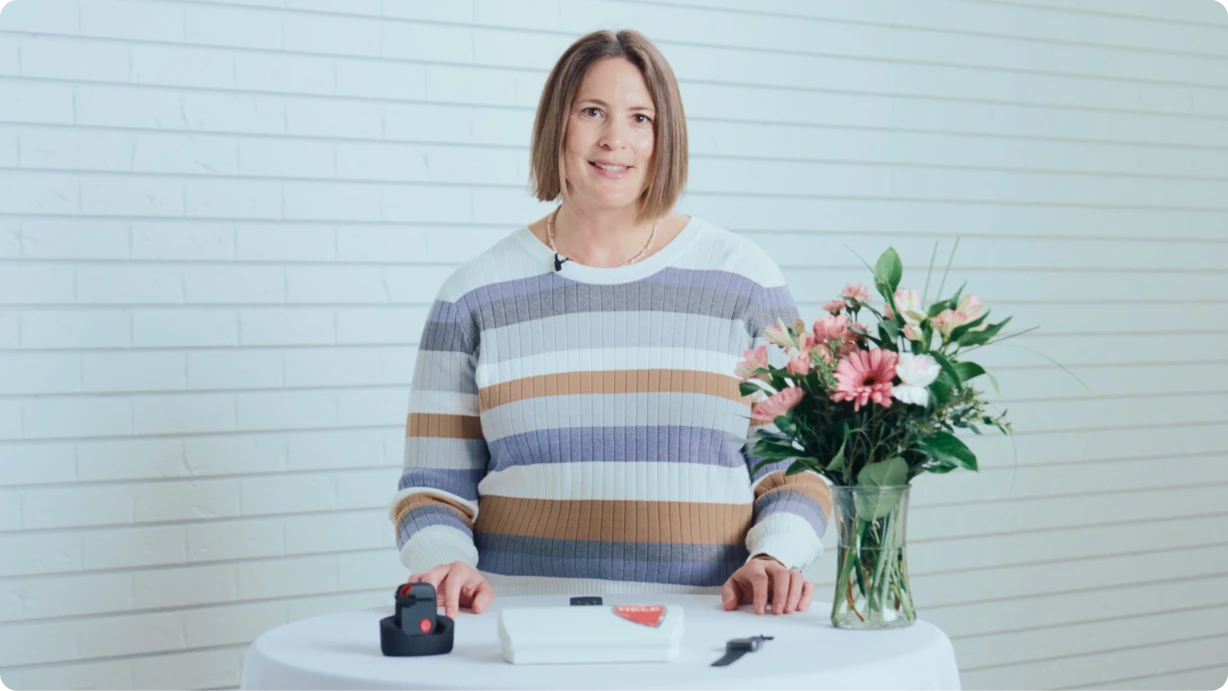
Customer service representative Kayla explains what a Vial of Life is and why having one can be important:
Hi, my name is Kayla and I am a customer service representative here at Bay Alarm Medical. Today we have a question that came in from Dell out of Washington, and Dell asks:
“What is a ‘Vial of Life’ and why do I need one?”
Dell, our Vial of Life is a medical information form, where you can list any medications or a medical conditions you have and any additional medical information you would need a paramedic to know in an emergency.
It will come in this clear plastic sleeve where you can go ahead and fill out and place it on the refrigerator once you’re done. If you have more than one person in the home that is needing monitoring we can bundle your service and set you up with an additional Vial of Life and an extra button so that their medical information will be easily accessible as well.
Why Is Medical Information So Important?
Emergency responders have to make decisions quickly. A medical alert system can summon help, but the emergency button itself does not necessarily tell paramedics everything they need to know about the person they are treating.
A Vial of Life can provide additional context. For example, knowing that someone takes blood thinners, has diabetes, has a serious medication allergy, has a pacemaker, or has a particular chronic condition may be relevant when EMS is assessing the situation. Information about a person’s doctor, emergency contacts or other important medical considerations may also be useful, depending on what is included on the form.
This becomes particularly valuable when the emergency involves a fall, loss of consciousness, confusion, a stroke-like event, breathing difficulty, or another situation in which the person cannot communicate reliably.
The Vial of Life doesn’t diagnose an emergency or replace professional medical judgment. Its purpose is much simpler: to make potentially important information available when time matters.
Keep the Information Current
A Vial of Life is only as useful as the information written on it. If medications change, a new medical condition is diagnosed, an allergy is discovered, or other important information changes, the form should be updated.
Medication lists deserve particular attention. Many older adults take several prescription and over-the-counter medications, and those medications can change over time. An outdated list could be misleading, so it is worth reviewing the form periodically and whenever there is a significant change in treatment.
It can also be helpful to make sure the information is legible and complete. Family members or caregivers who help manage medications can assist with reviewing the form to ensure that it accurately reflects the person’s current situation.
One Vial of Life for Each Person
When more than one person in a household receives monitoring, each monitored individual should have their own medical information readily available. Having separate forms helps prevent confusion and ensures that paramedics can distinguish one person’s medications, allergies and medical conditions from another’s.
Bay Alarm Medical can bundle service for multiple monitored family members and provide an additional Vial of Life and emergency button for the second person. This means that each individual’s emergency information can be kept readily accessible in the home.
A Simple Addition to an Emergency Plan
A Vial of Life is not a sophisticated piece of technology. That is part of its appeal. It is a simple, low-tech complement to a high-tech medical alert system.
The emergency button is there to summon assistance. The Vial of Life helps provide information once assistance arrives. Together, they address two different parts of the same problem: getting help to the home and giving responders useful information when they get there.
For older adults living alone, people managing multiple medications, or households where family members or caregivers may not be immediately present, that extra information can provide another layer of preparedness.
No one expects an emergency to happen at a convenient time. Having a Vial of Life completed and placed where EMS can readily find it is one small step that can help make a difficult situation a little easier for everyone involved.
If you any other questions please give us a call at 877-522-9633.
About the Author
As Bay Alarm Medical CMO, Alan Wu is deeply involved in the design of our products, from the hardware we use, to service pricing, to the feedback we receive from our customers so we can improve what we offer. He understands the questions and problems seniors may have, from weak cell signal in rural areas, to memory issues that can cause wandering. He works to find solutions to these and find ways our technology can make lives better and longer. Read his full credentials here.
Articles you might be interested in:
How to Install a Lock Box for Medical Alert Systems
How Do I Test My Medical Alert System?