
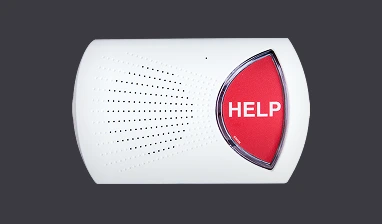
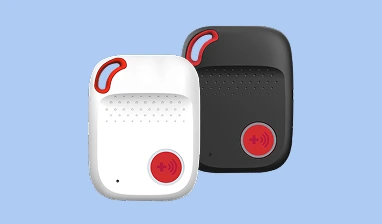
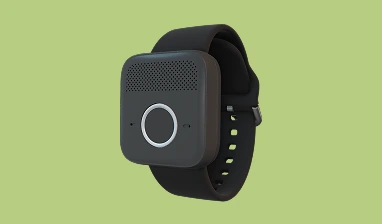
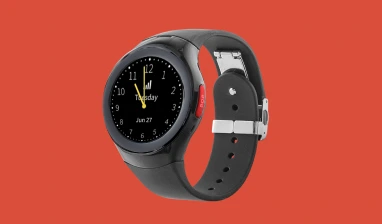





For an in-home medical alert system (not mobile), do you want to install the base station with cellular or landline connectivity? This is basically a choice between wired and wireless. Which is best for you? What are the differences, and the pros and cons? Let’s break this down.
Landlines are disappearing in America today, but at least a quarter of the population still has a landline connection (typically owning a mobile phone as well). The traditional landline technology is also disappearing, namely the copper wires connected to the phone jack, mounted usually on a wall. As Internet came to be provided through cable modems, so too Internet providers offered a landline system that plugged directly into the modem – note that this service is still hard-wired, running through a cable. Generally these Internet-based landlines will work with most alert systems (but check before buying).
Landline Connectivity
With a hard-wired landline system, the in-home base unit connects directly to your home’s phone line (which today may be your internet modem). When the emergency button is pressed, or an automatic alarm is initiated, the unit places a call over that phone line to the monitoring center.
Pros
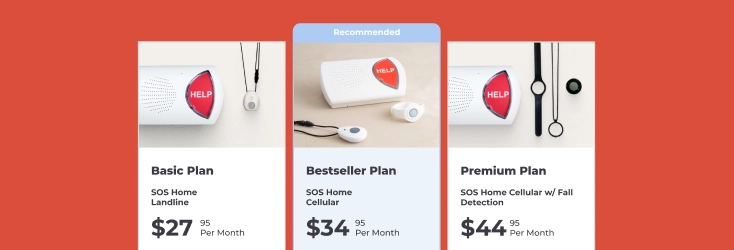
- Lower cost. Most providers charge less per month for an in-home system with a landline connection, since the cost of a cell chip and service is not required. making the landline a more affordable option. See our SOS Home system.
- Stable and simple. Landlines are reliable when the phone service is active and the power is on. They don’t depend on cellular signals.
- If your landline is the old style, provided by the phone company, it can operate even if your electricity goes down. You can still pick up the phone and call in a blackout (the minor amount of power required is supplied through the copper phone wires themselves).
Cons
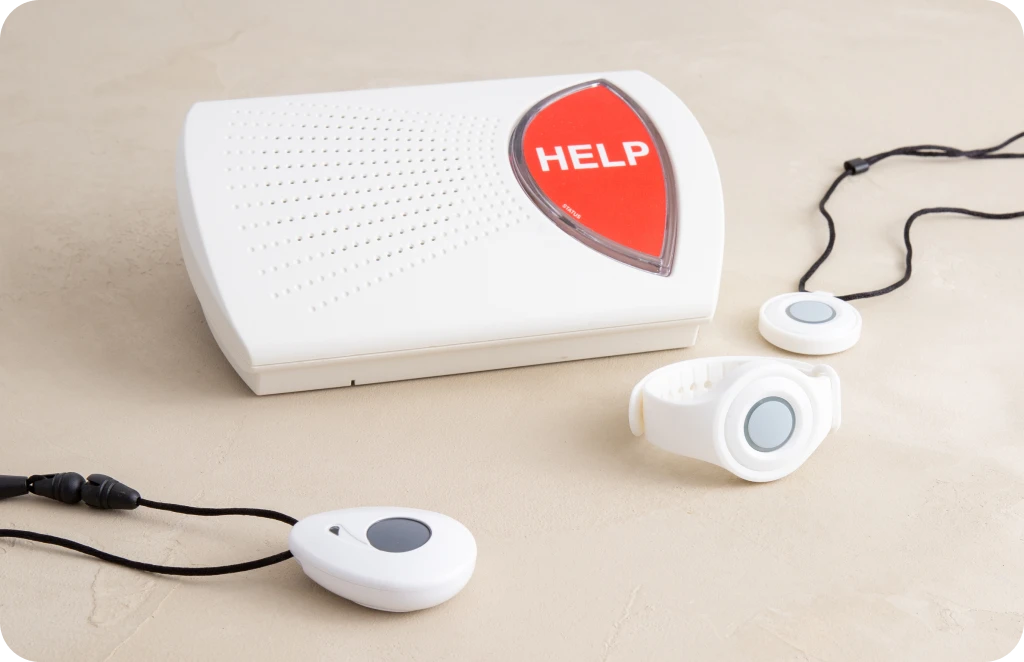
- As a home system, the wearable alert device is limited to the range of the base station signal, good enough to reach the back yard and the mailbox, but typically not to the corner store. Our SOS Homesystem has a range up to 1,000 feet.
- Dependent on landline service. If your phone line is down, the alert system can’t connect to the monitoring center or contacts list.
- While the Bay Alarm Medical base station has a backup battery, if a power outage can cancel the connectivity, the system will be unable to send an alarm during an outage.
- If your landline connects through your Internet modem, you might lose all phone service if electricity is lost (most modems have batteries).
Cellular Connectivity
Instead of using a landline, the base unit connects to a cellular network, just like a cell phone, or the mobile alert device. When help is needed, it calls the monitoring center over that wireless connection.
Pros
- No wired phone service is required. Ideal if you don’t have, or don’t want, a landline phone.
- More flexible setup. The base unit can be placed anywhere there’s good cell signal, not tied to a phone jack location.
- Outage-proof. Powered by its own battery, the system will still work through a power outage.
- Can be used during a stay in another home (in the USA).
- Easy setup. Just turn it on.
Cons
- Signal dependence. System reliability depends on local cellular reception. Places with weak signal such as some rural areas should consider the landline alternative.
- Network outage. Cell networks do experience outages sometimes, and during mass emergencies the networks can get overloaded with calls. (Perfect redundancy would match a cell connection with a wired connection, each as a backup to the other.)
- Higher cost. Most providers charge extra per month for an in-home system that uses a cellular connection rather than a landline, because of the greater overhead.
For an in-home medical alert system, cellular connectivity doesn’t rely on aging phone infrastructure, and it offers flexibility. Landline systems are viable if the home has dependable wire or cable phone service, and for a lower monthly cost.
Bundled systems like our SOS All-In-One 2 could potentially offer a large measure of redundancy and backup in case of outages. With the mobile device working on cellular, it could be worth considering landline connectivity for the home system, to complement the mobile cell network.